SSDs / Compare
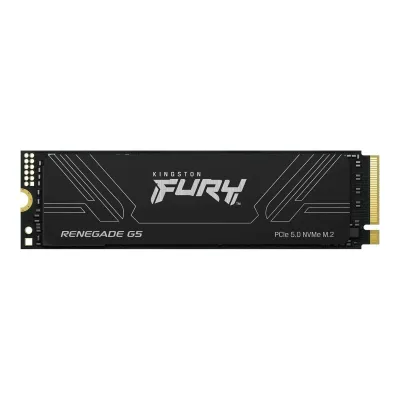
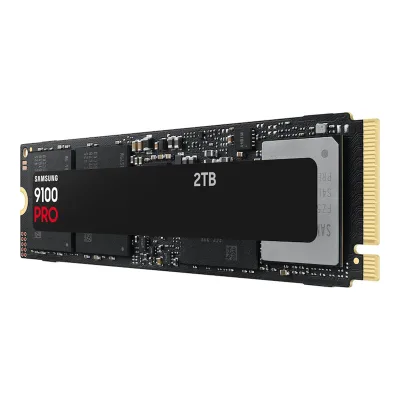
Kingston FURY Renegade G5 vs Samsung 9100 PRO
Product A: Kingston
44 of 63 known
Change Kingston FURY Renegade G5
Product B: Samsung
48 of 63 known
Change Samsung 9100 PRO
36 of 55 fields differ
- 20 different values
- 16 known for one only
- 13 the same
- 6 missing for both
Biggest differences
Each bar uses the scale of all 84 SSDs.
- EnduranceA: 2,000TBB: 1,200TBKingston is 800 TB higher.
- Random 4K read (claimed)A: 2,200,000IOPSB: 1,850,000IOPSKingston is 350,000 IOPS higher.
- Random 4K write (claimed)A: 2,200,000IOPSB: 2,600,000IOPSSamsung is 400,000 IOPS higher.
- Power while reading (claimed)Lower is betterA: 7WB: 8.1WKingston is 1.1 W lower.
Weight
0 to 150 g
All 63 fields
Every value links to where we found it.
General
6 of 9 differ
Series
Not available
Model numbers
SFYR2S/1T0, SFYR2S/2T0, SFYR2S/4T0, SFYR2D/8T11Maker spec sheet (PDF)kingston.com/datasheets/SFYR2S_us.pdfRead 14 October 2026Part numbers SFYR2S/1T0, SFYR2S/2T0, SFYR2S/4T0 and SFYR2D/8T1
MZ-VAP1T0BW, MZ-VAP1T0B/AM, MZ-VAP2T0BW, MZ-VAP2T0B/AM, MZ-VAP4T0BW, MZ-VAP4T0B/AM, MZ-VAP8T0BW, MZ-VAP8T0B/AM, MZ-VAP1T0CW, MZ-VAP2T0CW, MZ-VAP4T0CW, MZ-VAP8T0CW1Maker spec sheet (PDF)download.semiconductor.samsung.com/resources/data-sheet/Samsung_NVMe_SSD_9100_PRO_Datasheet_Rev.2.0.pdfRead 14 October 20262Maker spec sheet (PDF)download.semiconductor.samsung.com/resources/data-sheet/Samsung_NVMe_SSD_9100_PRO_with_Heatsink_Datasheet_Rev.2.0.pdfRead 14 October 2026Heatsink model codes MZ-VAP1T0CW, MZ-VAP2T0CW, MZ-VAP4T0CW, MZ-VAP8T0CW10Maker product pagesamsung.com/us/memory-storage/nvme-ssd/9100-pro-nvme-ssd-sku-mz-vap2t0b-amRead 14 October 2026US model codes MZ-VAP1T0B/AM, MZ-VAP2T0B/AM, MZ-VAP4T0B/AM, MZ-VAP8T0B/AM and heatsink MZ-VAP1T0CW to MZ-VAP8T0CW. The page shows current prices, which are not used
GTIN / EAN
740617349481, 740617349498, 740617349504, 74061735161311Retailer pagecomputerg.shop/shop/kingston-fury-renegade-g5-4tb-m-2-40289Read 14 October 2026Barcode and MPN on retailer pages, 13-digit EAN form with a leading zero, stored as the 12-digit UPC. SFYR2S/1T0 740617349481 (computerg.shop 40294), SFYR2S/2T0 740617349498 (computerg.shop 40290 and industry-electronics.com), SFYR2S/4T0 740617349504 (this page), SFYR2D/8T1 740617351613 (computerg.shop 40372). All pass the UPC check digit
Announced
Status
Predecessor
Not available
Successor
Not available
Not available
Launch price (US)
Not available
$299.995Press releasenews.samsung.com/us/samsung-announces-9100-pro-series-ssds-with-breakthrough-pcie-5-0-performanceRead 14 October 2026MSRP: 1TB $199.99, 2TB $299.99, 4TB $549.99. With heatsink: 1TB $219.99, 2TB $319.99, 4TB $569.99. US, excl. sales tax6Press releasenews.samsung.com/us/samsung-9100-pro-series-ssds-now-available-pre-order-8tb-capacityRead 14 October 20268TB MSRP $999.99, 8TB with heatsink $1,019.99, dated 9/9/2025, US
Markets
Not available
Not available
Colours
Not available
Form factor
Capacity
1,024, 2,048, 4,096, 8,192GB1Maker spec sheet (PDF)kingston.com/datasheets/SFYR2S_us.pdfRead 14 October 2026Capacities row reads 1024GB, 2048GB, 4096GB, 8192GB. Stored as published, since the datasheet states 1024GB and not 1TB. Kingston's headline says speeds up to 14,800MB/s read and 14,000MB/s write7Reviewstoragereview.com/review/kingston-fury-renegade-g5-ssd-review-balanced-gen5-performanceRead 14 October 2026Spec table lists 1,024GB, 2,048GB, 4,096GB and 8,192GB coming Q3 2025, copied from the datasheet
Interface
0 of 5 differ
Interface
PCIe generation
PCIe lanes
NVMe version
Detachable cable
Not available
Not available
Hardware
3 of 7 differ
Controller
Silicon Motion SM25081Maker spec sheet (PDF)kingston.com/datasheets/SFYR2S_us.pdfRead 14 October 2026Listed as SM2508. Stored with the maker name Silicon Motion, as the press release and reviews name it2Press articlesilicon.co.uk/press-release/kingston-fury-releases-high-performance-pcie-5-0-nvme-ssdRead 14 October 2026Silicon Motion SM2508 controller on 6nm lithography with a low-power DDR4 DRAM cache
Samsung Presto11Reviewtomshardware.com/pc-components/ssds/samsung-9100-pro-ssd-reviewRead 14 October 2026Review names Samsung's Presto controller, 5 nm, eight channels. Maker says only Samsung in-house controller14Reviewkitguru.net/components/ssd-drives/simon-crisp/samsung-9100-pro-2tb-gen-5-ssd-reviewRead 14 October 2026Samsung Presto PCIe 5.0 controller, eighth-generation V-NAND, LPDDR4X cache of 1GB per 1TB
Flash type
Flash memory
Flash layers
DRAM cache
DRAM1Maker spec sheet (PDF)kingston.com/datasheets/SFYR2S_us.pdfRead 14 October 2026DRAM cache: Yes. Press release says low-power DDR42Press articlesilicon.co.uk/press-release/kingston-fury-releases-high-performance-pcie-5-0-nvme-ssdRead 14 October 2026Low-power DDR4 DRAM cache3Reviewtomshardware.com/pc-components/ssds/kingston-fury-renegade-g5-2tb-ssd-reviewRead 14 October 2026LPDDR4 on all three capacities, a single DRAM package on the 2TB
DRAM cache size
2GB5Reviewkitguru.net/components/ssd-drives/simon-crisp/kingston-fury-renegade-g5-2tb-gen5-ssd/all/1Read 14 October 20262GB LPDDR4 on the 2TB, one 2GB low-power DDR4 IC, single-sided design with two 1TB NAND packages8Reviewkitguru.net/components/ssd-drives/simon-crisp/kingston-fury-renegade-g5-8tb-ssd-review/all/1Read 14 October 20268TB has an 8GB LGDDR4-4266 DRAM IC9Reviewbasic-tutorials.com/reviews/hardware-reviews/kingston-fury-renegade-g5-reviewRead 14 October 2026Technical data table for the 4TB reads 4 GB DRAM (Micron LPDDR4). The text says 1 GB DRAM cache per TB of flash. No source states the 1TB size, so it is left out
2GB1Maker spec sheet (PDF)download.semiconductor.samsung.com/resources/data-sheet/Samsung_NVMe_SSD_9100_PRO_Datasheet_Rev.2.0.pdfRead 14 October 2026Cache memory row, LPDDR4X, 1GB, 2GB, 4GB and 8GB by capacity3Maker product pagesamsung.com/uk/memory-storage/nvme-ssd/9100-pro-2tb-nvme-pcie-gen-5-mz-vap2t0bwRead 14 October 2026
Component sides
Single-sided3Reviewtomshardware.com/pc-components/ssds/kingston-fury-renegade-g5-2tb-ssd-reviewRead 14 October 2026Single-sided at 2TB and at all capacities up to 4TB. The 8TB is double-sided per KitGuru. The drive has a heat-spreading label and no heatsink version5Reviewkitguru.net/components/ssd-drives/simon-crisp/kingston-fury-renegade-g5-2tb-gen5-ssd/all/1Read 14 October 2026Single-sided design with all components on one side of the 12-layer PCB8Reviewkitguru.net/components/ssd-drives/simon-crisp/kingston-fury-renegade-g5-8tb-ssd-review/all/1Read 14 October 2026The 8TB is a double-sided design. One side holds the controller and two NAND packages, the other holds two more NAND packages and the DRAM
Single-sided11Reviewtomshardware.com/pc-components/ssds/samsung-9100-pro-ssd-reviewRead 14 October 2026Single-sided design with controller, one DRAM package and two NAND packages on the 2TB. Review says the drive can be single-sided up to 4TB and an 8TB drive needs four NAND packages and so is double-sided13Reviewtomshardware.com/pc-components/ssds/samsung-9100-pro-ssd-review/3Read 14 October 2026Review states the 9100 Pro can field a single-sided drive up to 4TB
Performance
3 of 4 differ
Sequential read (claimed)
Sequential write (claimed)
Random 4K read (claimed)
Random 4K write (claimed)
Endurance and reliability
2 of 3 differ
Endurance (TBW)
MTBF or MTTF (claimed)
Operating temperature
Power
6 of 6 differ
Power while reading (claimed)
Power while writing (claimed)
Not available
Max power consumption (claimed)
7W1Maker spec sheet (PDF)kingston.com/datasheets/SFYR2S_us.pdfRead 14 October 2026Listed as (MAX): 6.6 W, 7.0 W, 9.5 W and 9.5 W for 1024GB to 8192GB. Footnote 4: max power is a typical value. A write-specific power figure is not published5Reviewkitguru.net/components/ssd-drives/simon-crisp/kingston-fury-renegade-g5-2tb-gen5-ssd/all/1Read 14 October 2026Power quoted as 0.27 W average and 7 W maximum for the 2TB, same as the datasheet
Not available
Average power in light use (claimed)
Not available
Idle power (claimed)
Not available
Measured
9 of 9 differ
Sequential read (measured)
Sequential write (measured)
Random 4K read at queue depth 1 (measured)
Random 4K write at queue depth 1 (measured)
Write cache size (measured)
Not available
Write speed after the cache (measured)
Not available
3DMark Storage Benchmark
Not available
Highest temperature under load (measured)
67°C12Reviewtomshardware.com/pc-components/ssds/samsung-9100-pro-ssd-review/2Read 14 October 20262TB, bare drive. Maximum 67 C in the 15-minute Iometer write test and other runs, mostly under 60 C. Primary composite sensor, about 22 C ambient, active cooling unless noted, Intel Core i9-12900K on Asus ROG Maximus Z790 Hero, drive prefilled to 50% and tested as a secondary device. The review does not say if the 2TB sample had a heatsink and calls it the bare comparison point for the 4TB. KitGuru logged 46 C in short runs under a motherboard heatsink, and techtest.org reported over 100 C in a CrystalDiskMark pass and does not state the cooling, which are different methods13Reviewtomshardware.com/pc-components/ssds/samsung-9100-pro-ssd-review/3Read 14 October 20264TB bare drive 71 C and 4TB with Samsung's heatsink 47 C, same test bench and method as the 2TB
Cooling and build
1 of 4 differ
Heatsink
Without heatsink1Maker spec sheet (PDF)kingston.com/datasheets/SFYR2S_us.pdfRead 14 October 2026No heatsink version is listed. Datasheet lists one drive design per capacity3Reviewtomshardware.com/pc-components/ssds/kingston-fury-renegade-g5-2tb-ssd-reviewRead 14 October 2026Drive comes with a heat-spreading label only. The review says a heatsink option would be nice, so none is sold
RGB lighting
Not available
Not available
Dust and water rating
Not available
Not available
Drop test height
Not available
Not available
Security and software
2 of 2 differ
Security
Not available
AES 256-bit hardware encryption, TCG Opal 2.0, IEEE 1667 (eDrive)1Maker spec sheet (PDF)download.semiconductor.samsung.com/resources/data-sheet/Samsung_NVMe_SSD_9100_PRO_Datasheet_Rev.2.0.pdfRead 14 October 2026Published as AES 256-bit Full Disk Encryption, TCG/Opal V2.0 and Encrypted Drive (IEEE1667)
Software
Compatibility
1 of 1 differ
Platforms
Not available
Dimensions and weight
2 of 2 differ
Dimensions
Length80Width22Height2.3mm(3.1 × 0.9 × 0.1 in)1Maker spec sheet (PDF)kingston.com/datasheets/SFYR2S_us.pdfRead 14 October 20261024GB to 4096GB: 80mm x 22mm x 2.3mm. 8192GB: 80mm x 22mm x 3.65mm5Reviewkitguru.net/components/ssd-drives/simon-crisp/kingston-fury-renegade-g5-2tb-gen5-ssd/all/1Read 14 October 20262TB 80 x 22 x 2.3 mm, same as the datasheet8Reviewkitguru.net/components/ssd-drives/simon-crisp/kingston-fury-renegade-g5-8tb-ssd-review/all/1Read 14 October 20268TB 80 x 22 x 3.65 mm
Length80.15Width22.15Height2.38mm(3.2 × 0.9 × 0.1 in)1Maker spec sheet (PDF)download.semiconductor.samsung.com/resources/data-sheet/Samsung_NVMe_SSD_9100_PRO_Datasheet_Rev.2.0.pdfRead 14 October 2026Maximum size. 1TB, 2TB and 4TB: 80.15 x 22.15 x 2.38 mm. 8TB: 80.15 x 22.15 x 3.88 mm. Base is the 2TB bare drive2Maker spec sheet (PDF)download.semiconductor.samsung.com/resources/data-sheet/Samsung_NVMe_SSD_9100_PRO_with_Heatsink_Datasheet_Rev.2.0.pdfRead 14 October 2026Heatsink models, maximum size. 1TB to 4TB: 80.15 x 25 x 8.88 mm (PCI-SIG D8). 8TB: 80.15 x 25 x 11.25 mm, listed as top 8.0 mm, PCB 0.8 mm and bottom 2.45 mm
Weight
7.7g(0.3 oz)1Maker spec sheet (PDF)kingston.com/datasheets/SFYR2S_us.pdfRead 14 October 20261024GB 7.3 g, 2048GB and 4096GB 7.7 g, 8192GB 9.2 g5Reviewkitguru.net/components/ssd-drives/simon-crisp/kingston-fury-renegade-g5-2tb-gen5-ssd/all/1Read 14 October 20262TB 7.7 g, same as the datasheet8Reviewkitguru.net/components/ssd-drives/simon-crisp/kingston-fury-renegade-g5-8tb-ssd-review/all/1Read 14 October 20268TB 9.2 g
9g(0.3 oz)3Maker product pagesamsung.com/uk/memory-storage/nvme-ssd/9100-pro-2tb-nvme-pcie-gen-5-mz-vap2t0bwRead 14 October 2026Specifications tab, Max 9.0 g. The 1TB and 4TB pages (same URL pattern, mz-vap1t0bw and mz-vap4t0bw) read the same. The 8TB bare page reads Max 9.5 g. Heatsink pages read Max 30.0 g for 1TB, 2TB and 4TB and Max 35.0 g for 8TB. Published as maximum weights4Maker product pagesamsung.com/uk/memory-storage/nvme-ssd/9100-pro-8tb-nvme-pcie-gen-5-with-heatsink-mz-vap8t0cwRead 14 October 2026Heatsink 8TB, Max 35.0 g. The page also states 14,800 and 13,400 MB/s, 2,200,000 and 2,600,000 IOPS, 10.5 W read, 8.8 W write, 9.3 mW idle and 8.6 mW device sleep, the same as the heatsink datasheet Rev 2.0
In the box
1 of 2 differ
In the box
Not available
Samsung SSD 9100 PRO 1TB, Samsung SSD 9100 PRO 2TB, Samsung SSD 9100 PRO 4TB, Samsung SSD 9100 PRO 8TB, Samsung SSD 9100 PRO with Heatsink 1TB, Samsung SSD 9100 PRO with Heatsink 2TB, Samsung SSD 9100 PRO with Heatsink 4TB, Samsung SSD 9100 PRO with Heatsink 8TB, Warranty Statement1Maker spec sheet (PDF)download.semiconductor.samsung.com/resources/data-sheet/Samsung_NVMe_SSD_9100_PRO_Datasheet_Rev.2.0.pdfRead 14 October 2026Product lineup table, box contents are the drive and a warranty statement2Maker spec sheet (PDF)download.semiconductor.samsung.com/resources/data-sheet/Samsung_NVMe_SSD_9100_PRO_with_Heatsink_Datasheet_Rev.2.0.pdfRead 14 October 2026Product lineup table, box contents are the drive with heatsink and a warranty statement
Cables included
Not available
Not available
Links
Not compared
Product page
www.kingston.com/en/ssd/gaming/kingston-fury-renegade-g5-nvme-m2-ssd12Maker product pagekingston.com/en/ssd/gaming/kingston-fury-renegade-g5-nvme-m2-ssdRead 14 October 2026Kingston's product page for the drive. The page returned HTTP 403 to automated requests, so it was not read. A search listing shows its title and Kingston's datasheet carries the same values
Spec sheet
Manual
Not available
org.downloadcenter.samsung.com/downloadfile/ContentsFile.aspx9Owner's manualorg.downloadcenter.samsung.com/downloadfile/ContentsFile.aspxRead 14 October 2026Samsung Solid State Drive Installation Guide, the only manual listed under MZ-VAP2T0 on Samsung's UK support page. It covers Samsung SSDs in general, in many languages
EPREL registration number
Not available
Not available
Warranty
0 of 1 differ
Manufacturer warranty (source market)
5years1Maker spec sheet (PDF)kingston.com/datasheets/SFYR2S_us.pdfRead 14 October 2026Limited 5-year warranty with free technical support, or the Percentage Used limit in Kingston SSD Manager2Press articlesilicon.co.uk/press-release/kingston-fury-releases-high-performance-pcie-5-0-nvme-ssdRead 14 October 2026Limited five-year warranty